Disrupt Yourself
#28 Disrupt Yourself
This series is about what we’re learning, observing and experiencing while building our startup Saent (pronounce “Saint”). The good, the bad and especially the ugly, each time in under 5 minutes reading time.
Disruption. Steve Jobs was a fan. TechCrunch named an event after it. CNBC produces an annual ranking list.
In his 1997 book “The Innovator’s Dilemma,” Clayton M. Christensen popularized the concept of “disruptive innovation”; it is the reason why currently everyone is either disrupting or getting disrupted.
While the concept as presented by Christensen is contested by some, the underlying idea of “replacing something existing with something entirely new through innovation” can be applied to more than entire businesses “disrupting” each other. For example, it can also be relevant to the product lifecycle within a company.
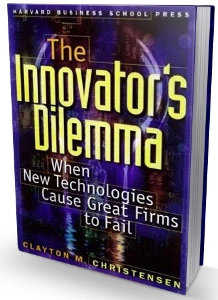
*Disruptive versus sustainable* In his book, Christensen explains how disruptive innovations are the opposite of sustainable ones. The latter build on an existing product (improvements), while the former basically trash what is already there and replace it.
In the case of businesses, this means market leaders usually fail to engage in, or even notice, disruptive innovation, since it involves taking more risk than sustainable innovation. In fact, it often requires not listening to your customers and rendering your own products obsolete. This is why Steve Jobs was a fan: he wanted Apple to avoid the path of Sony, which had so much riding on its own hit products (Walkman, cassette-based video cameras) that it was afraid to “disrupt” itself and hence blocked innovation within the company.
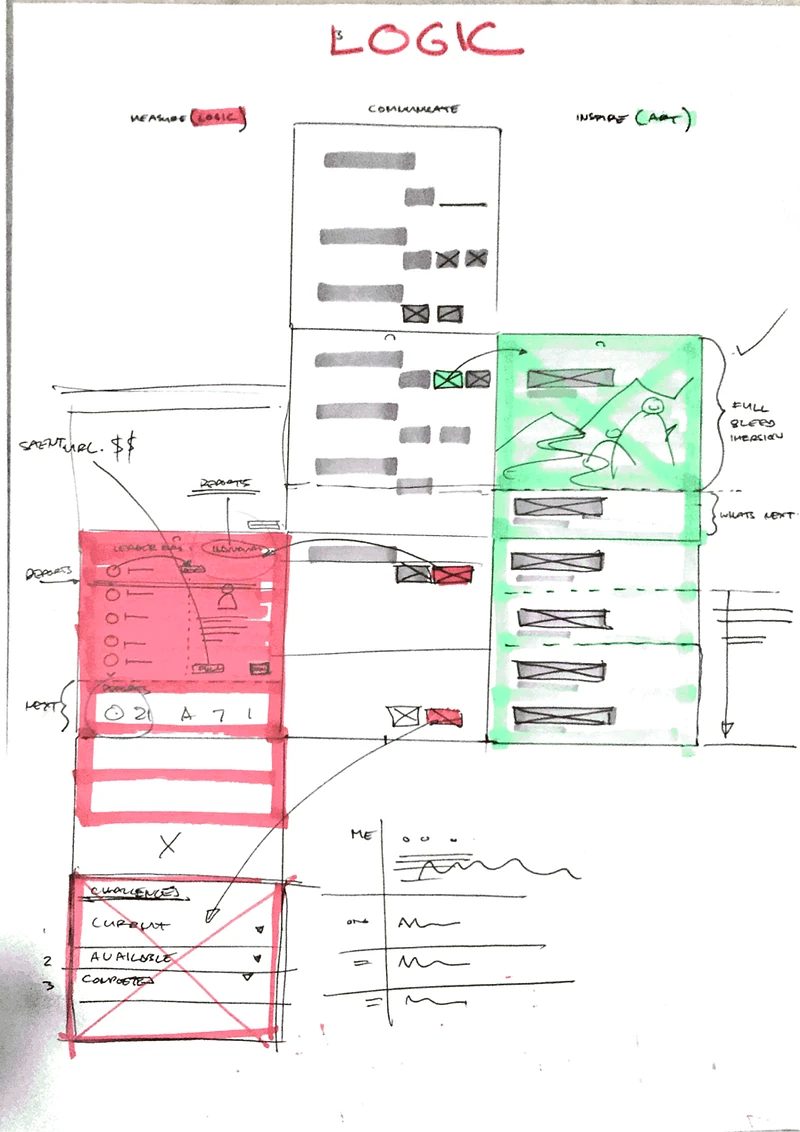
*Early stage disruption* Imagine this: you’ve spent almost a year working on an application you’re eager to release to the world. In fact, more than 1,000 people have pre-ordered it and are waiting in anticipation. Testing results look promising, and you’re 90% there based on your original scope. Then you realize there’s a 10x better way to do things. What do you do?
As you might have guessed, this scenario is not hypothetical, it’s what we faced with Saent in December. We didn’t have to trash our entire product, but completely redoing the user interface — in an unconventional and unproven way — was no small feat. And then we more or less did it twice.
*Oops!… I did it again* We were over the moon when we figured out a way of creating a “contextual” user interface (UI) for our software. It solved most of the core issues our testers had identified and it provided the perfect solution for giving Saent a true personality (something we had always wanted to do). So we went ahead, rebuilt the entire UI and rolled it out to our testers.
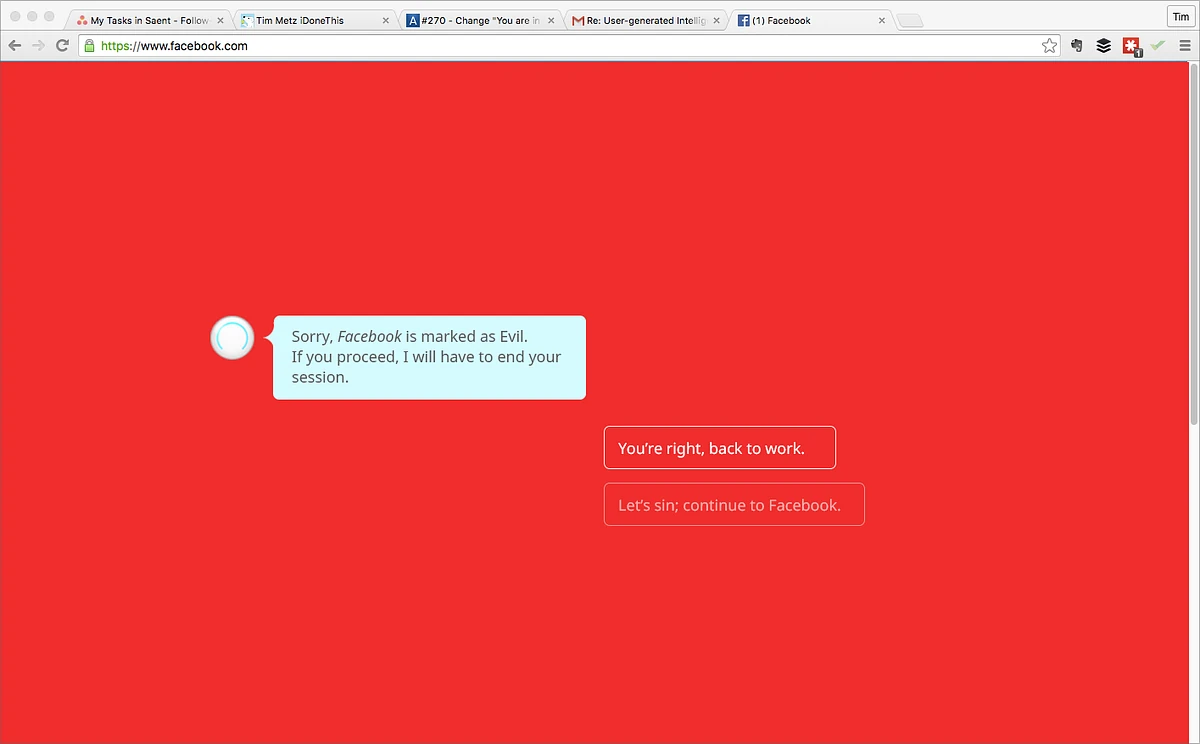
The result was amazing: the application finally began to have a personality of its own, and the overall user experience was greatly improved because it did a much better job of fulfilling the core purpose of Saent (helping you focus and build solid work habits). At the same time, we felt it could still be better visually, and so even as we implemented the new UI for testers, we simultaneously started working with design agency Motel to further improve the aesthetics.
Working with the amazing folks at Motel is probably the best thing that has happened to us so far in 2016. “Unfortunately,” their designs and ideas again completely “disrupted” our own conversational UI. While a lot of the technical foundations would remain the same, overhauling this once more was still a challenge. Were we really going to disrupt ourselves again?
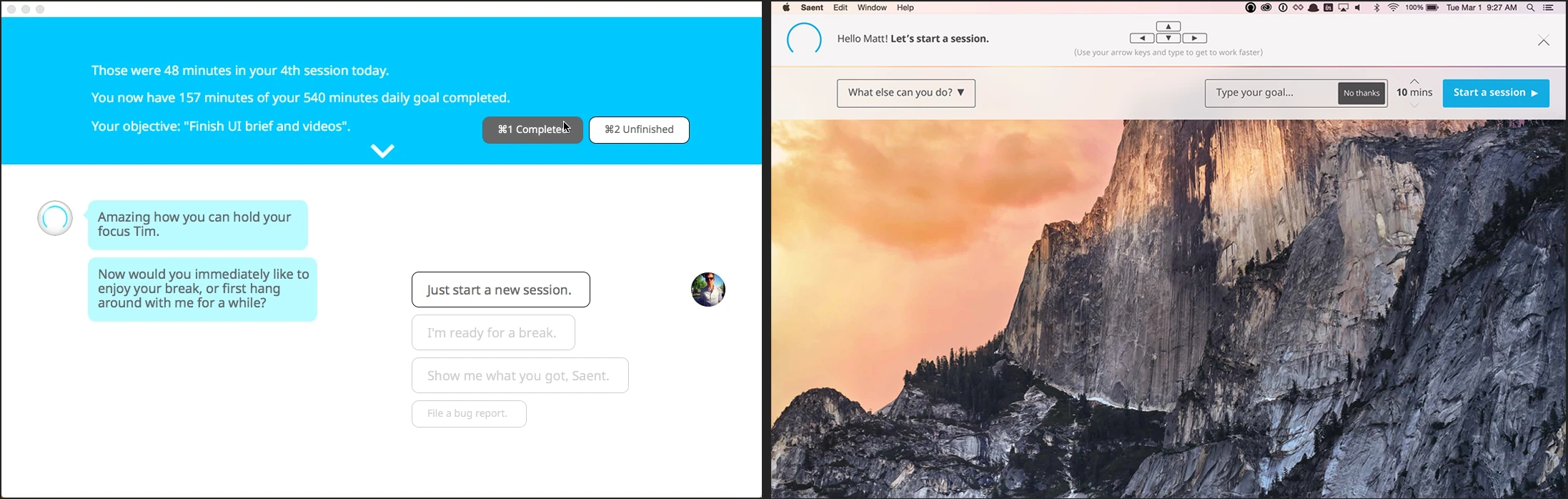
On the left our own conversational UI mockup, on the right what Motel did with it.
*Sunk cost* When having to make these decisions of whether to “disrupt” your own work, many factors are at play that complicate the matter:
- Outside pressure (from eager customers waiting for their product).
- Fear of failure (not unthinkable when implementing something completely unconventional and untested like a conversational UI).
- The well-worn lean advice of shipping early and often.
- The very real possibility of falling into the Perfection Trap.
But besides obvious considerations such as the above, there is another complicating factor at play: sunk cost.
The time (and money) you’ve already put in weighs heavily on your shoulders; it’s painful to throw things away — or at the very least disable them — when you’ve spent weeks or longer creating them. Instinctively, more features feels like getting more bang for your buck (both for your customers and your investors).
Ultimately, that’s not what it’s about though; it’s about delivering a great user experience, and we will actually have fewer features in the application than we had six months ago. This seems counterintuitive, spending all that time and money to actually get to a slimmer product. But the hard part is often not adding features; it’s eliminating them — or sometimes even starting completely from scratch, disrupting yourself — and then perfecting the ones you do keep.
Ready to give Saent a try?
Download the free app now to start working smarter, being more focused, and developing better work habits.
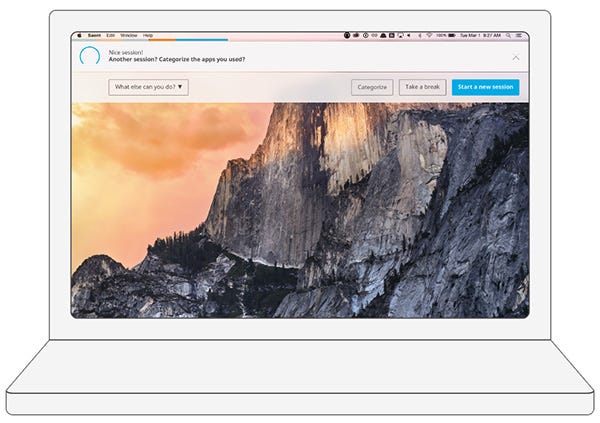
You can download the free version of the Saent app now by clicking the image above.
Or buy your Saent button (now shipping!) with a 12-month subscription to the Premium Saent app included!