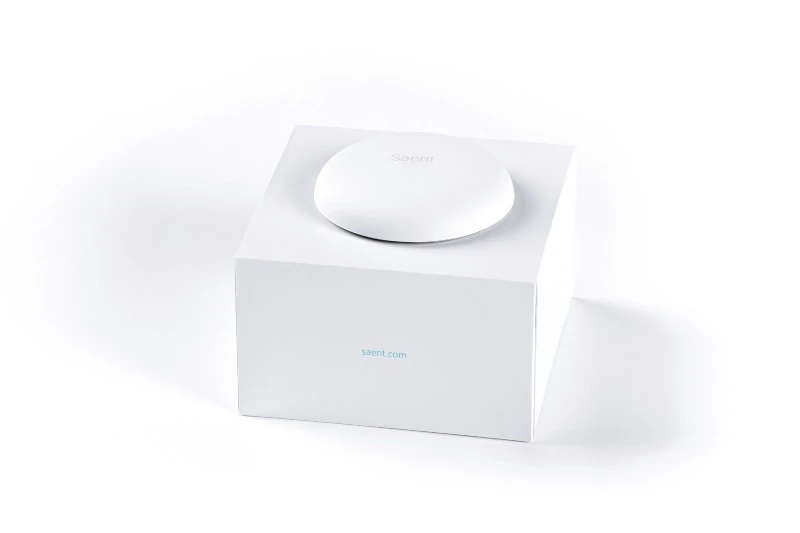
Evolution of a Pitch (Deck)
2016: Evolution of a Pitch (Deck)
This series is about what we’re learning, observing and experiencing while building our startup Saent (pronounce “Saint”). The good, the bad and especially the ugly, each time in under 5 minutes reading time.
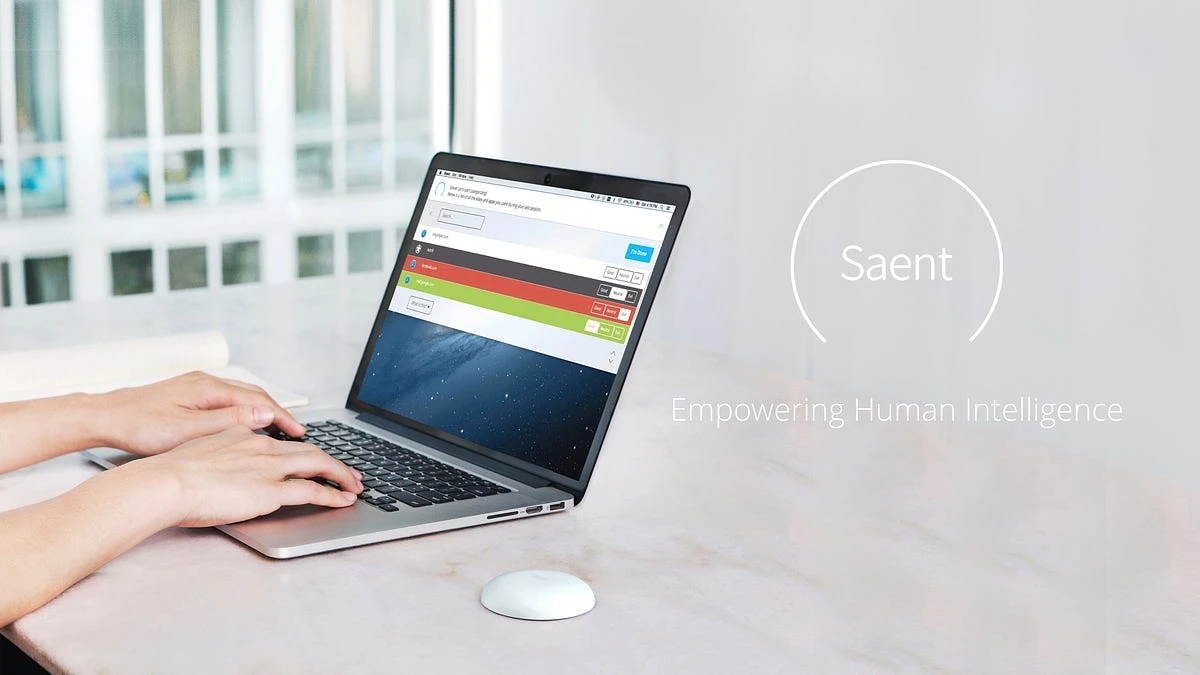
Any time you want to raise money for your startup from outside investors, you need a pitch deck: a set of slides that explains what your startup does and why you want money. This sounds easier than it is.
A Google search for “pitch deck” reveals close to 22.5 million results and interest in the term is on the increase (see below Google Trends image). There are thousands of articles on how to create a deck. There are consultants whose entire practice is based around creating the perfect pitch for entrepreneurs. And famous “accelerators” like Y Combinator and Techstars spend a lot of their limited time on perfecting your presentation to investors.

This abundance of information and help doesn’t make life any easier. Some say the deck should be no more than 10 slides, others say 25 is ok. There are folks who swear the “Team” slide should come first, others indicate your elevator pitch is more important. And while you can find plenty of examples of superstar pitch decks online (from companies like AirBnb and LinkedIn), none of them show what went on “behind the scenes:” how did those founders arrive at that specific way of presenting their idea? How many iterations did it take to get there? What did they discard along the way? Did their deck even play a crucial role in the deal or some totally different factor? Are they an outlier or can you glean some helpful universal truth from their experience?
While we have yet to raise millions, we have so far raised over $500,000. We’ve done this in a few stages and I’m going to share how our story and pitch has evolved over the past one and a half years.
*1. The oral pitch (pre-seed, February 2015)* Our first investment of $100k was actually raised without an actual pitch deck. We used this landing page and pitched in person without any slides to someone I knew well. I did later summarize the story in a deck, which can be found here.
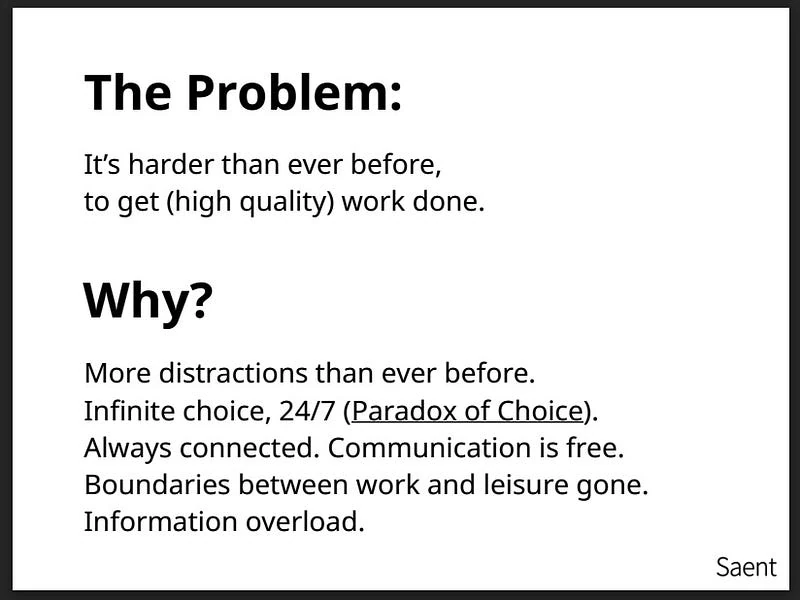
A few things stand out, looking back in hindsight:
- We presented simple and clear ideas for the vision, mission, and problem we’re solving. Later on we made some of these much more complex but eventually came back to these original statements.
- The timelines for everything are way too ambitious and we never hit them. Luckily this didn’t really get us in trouble, but we could have done better here had we discussed our estimates and forecasts with more experts.
- There are no financials whatsoever, nor a clear overview of the team. We likely couldn’t get away with this under normal conditions, but our first investment was largely based on personal trust.
From here we started focusing on our crowdfunding campaign and the next fundraising efforts kicked in in October.
*2. Seed round (November 2015)* This deck helped us close an additional ~$200k in November of 2015, though the extensive business plan we put together played a key role as well.
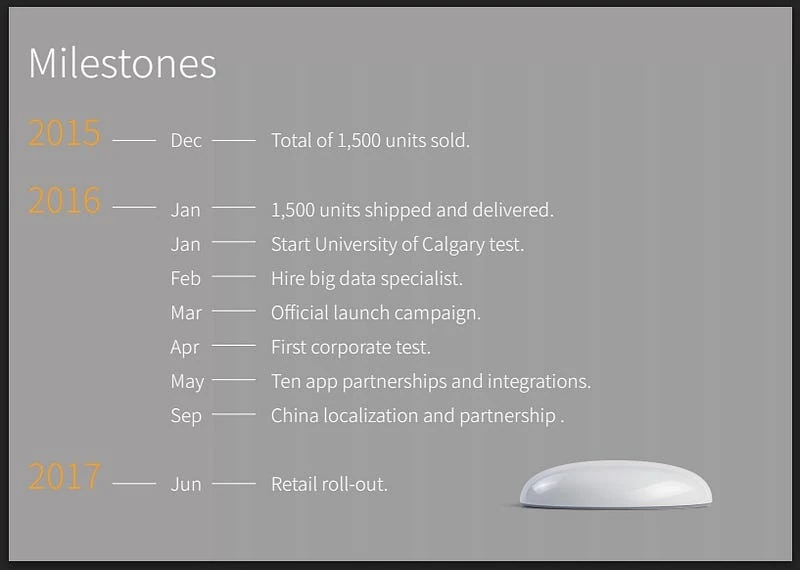
Some key learnings:
- Our forecasts were still way too optimistic. Not only did we not hit these sales figures, they were also pretty much impossible considering the upfront investments that would have to go into inventory to make these kind of sales happen (something we now understand).
- There is much more — and perhaps even too much — emphasis on the hardware. While an important aspect of our first product is a hardware component, the core of our (future) business is the software. This deck perhaps gave too much of an impression that we’re only a hardware company.
- Setting up the problem and explaining the product takes up too many slides (as we learned from later feedback).
- We added a Team slide. Investors usually care more about the team than anything else. The rationale? A great team with a failing product can make it work (or at least “pivot”); a shitty team with a great product will likely mess things up.
*3. Y Combinator interview (April 2016)* Earlier this year, out of thousands of startups, we got selected together with 300 others to come down to California for an interview with Y Combinator (YC).
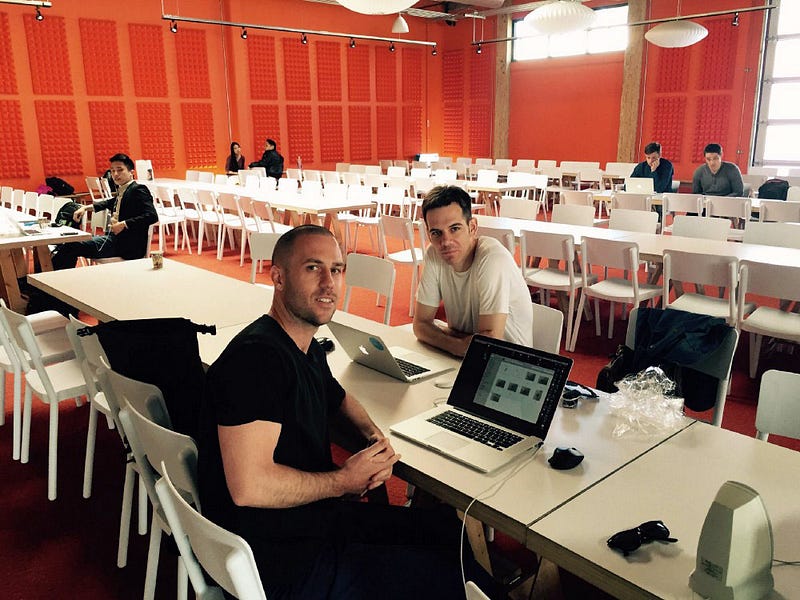
While YC doesn’t accept or review any pitch decks during their 10-minute (!) interview, this event still greatly influenced our pitch; we didn’t make it through the selection process, but the YC folks were kind enough to explain why in an email.
Here’s what we learned from that experience:
- The core of our business model is software (SaaS), complemented by hardware (physical) products. Unfortunately, in our YC interview, it came across as if we wanted to build a business based solely around unit sales of the hardware. YC didn’t consider that a big enough business opportunity for them to invest in. This experience greatly influenced our pitch, which now presents a more holistic view of Saent’s business model and potential.
- To be appealing to VCs in Silicon Valley, you need to have an earth-shattering business idea. Partly because the conversation got stuck on the hardware, and partly because we followed advice we found online to only talk about what the product currently does, we couldn’t get across why we see a huge potential for Saent.
- Most outsiders, even hugely experienced ones like the folks at YC, will not pull the vision and potential out of you if you can’t explain it well yourself. This is why you start your startup and not someone else: until you explain and create it, the potential is not necessarily obvious to outsiders.
*4. Angel round (July 2016 — September 2016)* This is the most recent round we closed, in which we raised $250k from our existing investors.
This deck has gone through a mini-evolution over the past few months, partly because of these very useful pitch review videos from TechStars. We started with a version that was heavy on our create-tools-for-a-new-way-of-working idea, then went with an emphasis on b2b and finally went back to “regroup” around the core concept of focus and our product. Here is the final version.
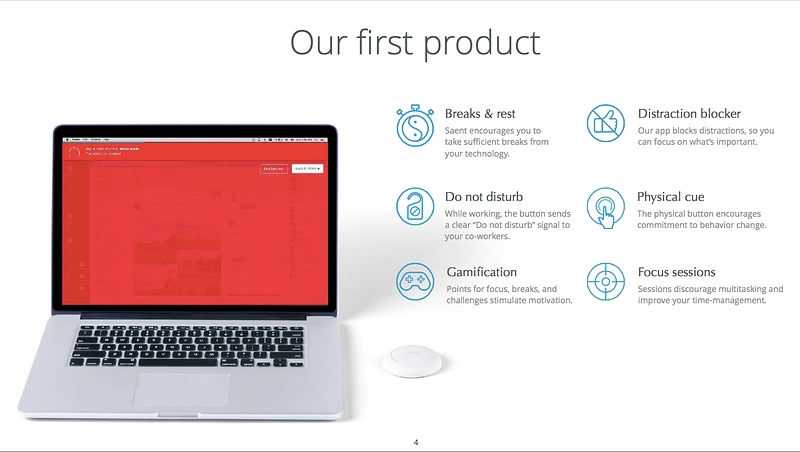
Key learnings from this deck:
- Based on all the user interviews we did over the past months, we’ve restructured the message around the core problem Saent resolves: it helps people focus.
- Since this deck is meant to get an introduction or meeting with someone, not to give an actual presentation, we’ve taken out details on go to market and sales strategy to shorten it.
- As our product is completely unique and new, we’ve taken more slides to explain what it is and what it does in this final version.
- A big struggle in this deck has been how to explain the opportunity and the market size. Based on feedback we’ve had, the latter still seems too generic and vague (e.g., a $XXB market), and our pitch still needs work to show how exactly we’re planning to capture that market.
*What’s next?* We’re currently focused on improving some of our core metrics (user growth, button sales) and have started preparing for our next investment round, which will likely be a larger Series A-sized amount. We will update this article (or write a part II) with the Series A deck when we have it ready.
I hope the above was useful for you if you’re working on a pitch deck. Here are some other links that greatly helped us while doing this:
- How to Raise Money by Paul Graham;
- Lessons From A Study of Perfect Pitch Decks on TechCrunch;
- The Best Startup Pitch Decks;
- 30 Legendary Startup Pitch Decks And What You Can Learn From Them on Piktochart;
- TechStars videos.
Good luck!
Need more focus in your life?
Visit saent.com to learn more about our magical button that helps you focus and live a more balanced life.