What We’re Learning During Our Crowdfunding Campaign
(Reporting Mid-Flight)
On July 7, we launched our crowdfunding campaign to raise $100,000 for Saent, the world’s first hardware/software product designed to block distractions and help people be more productive. Before we pressed publish on our Indiegogo page, we put our entire campaign strategy on Medium. We shared exactly what we thought we had to do to raise — and hopefully exceed — our $100,000 goal, both prior to and during the campaign. Now, a bit over a week in, we’re pausing to reflect on what went right, what went wrong, and what we’ve learned along the way.
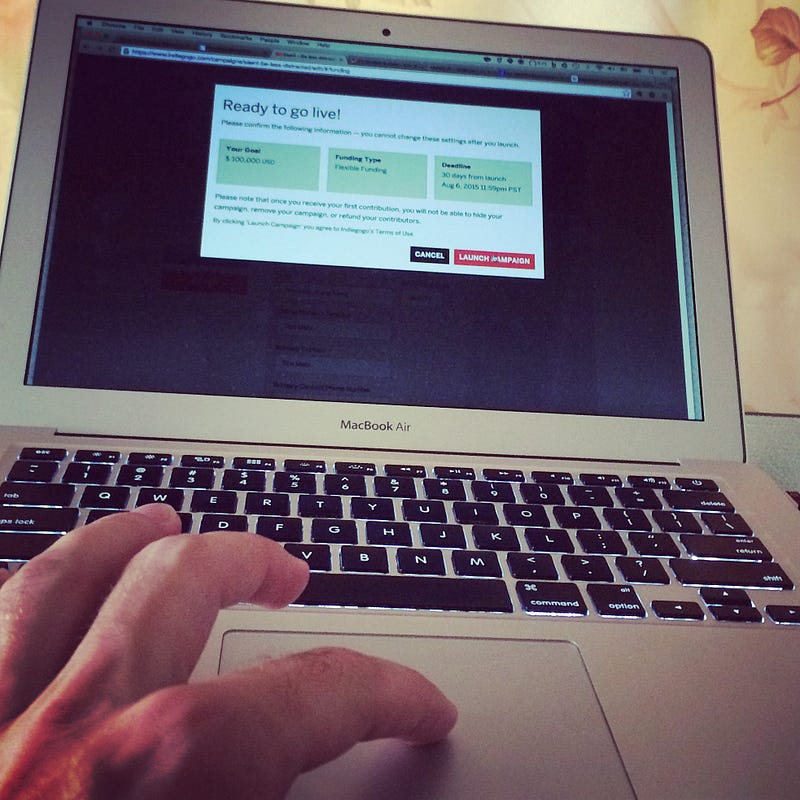
Me hitting the launch button for our Indiegogo campaign on 7th of July 2015.
I read somewhere that running a crowdfunding campaign is an exhilarating experience, but nothing compares to actually living it. It’s both thrilling and exhausting.
We’re only a bit over a week in at the time of this writing, but it’s already been an emotional rollercoaster. The continuously changing feelings I’ve had can best be described to those similar when you host a party.
You’ve noted in the invitation “doors open” at 7 pm, but of course nobody shows up at that time. By 7:20 pm, you tell yourself it makes total sense nobody has arrived yet, but by 7:30 pm you start to feel queasy. Finally the first guest arrives, then another and suddenly a steady flow of people are coming through your front door. All is great!
At 9:30 pm someone leaves. Then a whole group excuses themselves to leave and another guest departs because she “still has another party to go to.” The room starts to feel a bit empty. But what about all those people who said they’d join but you haven’t seen yet? Will they still come? Is the house going to be empty by the time they arrive, triggering them to jump ship immediately as well?
Watching your crowdfunding campaign progress is like a stretched-out and magnified cycle of this experience. A sudden surge, then nothing for a while. You wake up expecting a huge change, but the numbers are remarkably similar to when you went to bed. Next thing you know you’re on Mashable and Newsweek and things move ahead again with full speed.
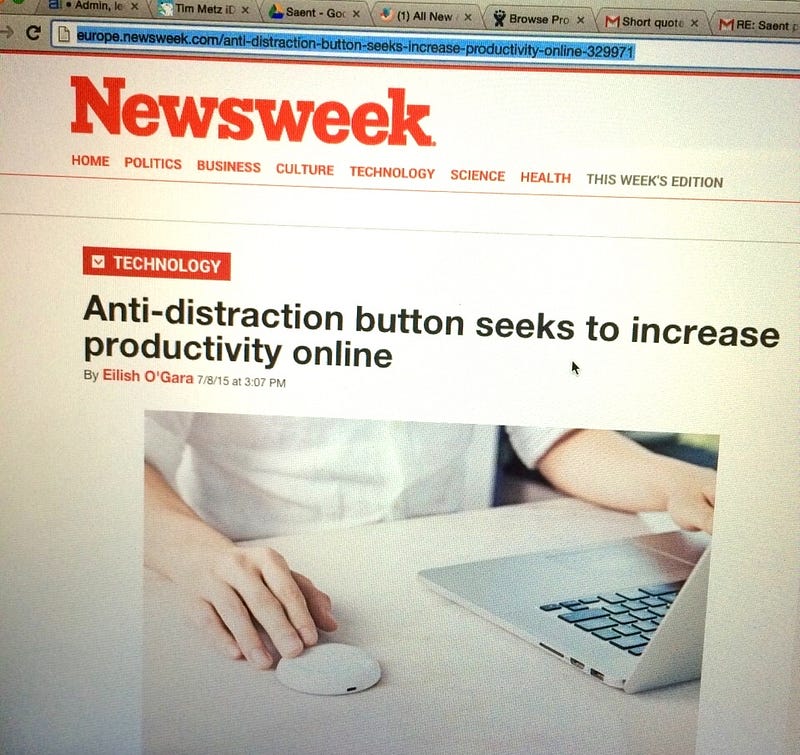
Speaking of rollercoasters: one moment you’re despairing and begging your mother to back you, then suddenly you find your product featured on Newsweek.
The true source of all this excitement and anxiety is the brutally honest figure of how much money has come in, updated in real-time. It’s constantly in your face, for all the world to see. Even for a battle-hardened productivity guy like myself, it’s hard to resist the urge to constantly refresh our Indiegogo page and drive myself to insanity (speaking of distractions).
Growing up fast
As with any intense experience, running a crowdfunding campaign is learning at maximum speed. You quickly realize what works and what doesn’t, what you should have done and what you should not have done. Here are 10 things we’ve learned so far. I’m going through them chronologically, from pre-launch to where we are now.
*1. Writing content pays off* This is not something you can start a few days before your campaign launch. Building up a good “library” of content and a subsequent following of readers takes at least several months, if not longer. Yet once you have a steady flow of quality content coming out, people start to take notice.
Not only did we see good conversion from our blog and Medium articles, it also creates trust and credibility when potential supporters research your product and see you know what you’re talking about (productivity, in our case).
2. A longer landing page might not be so bad
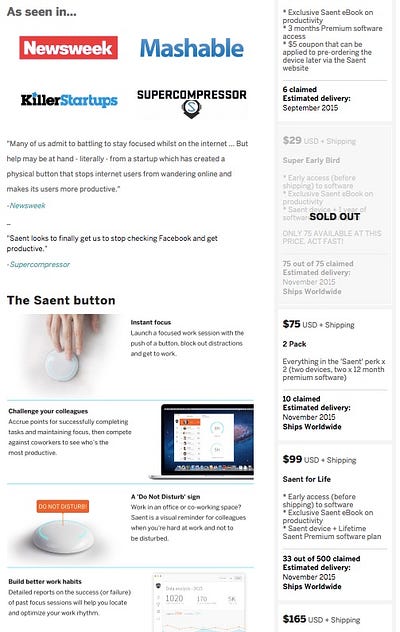
A small excerpt of our Indiegogo “landing page”.
Most conventional marketing advice seems to indicate a shorter pre-launch landing page is better than a long one; make people curious, then quickly convert them to leave their email address.
While this might be true for products that are in established categories, our own experience with our Indiegogo campaign page leads me to question this belief. Like any other crowdfunding page, our Indiegogo campaign page would be considered a very long landing page. But the campaign page gets much better response than the short, pre-launch page we used.
A completely new and alien product like ours therefore might be better off with a much longer page explaining everything in detail, even though this flies against all conventional growth hacking wisdom.
Bonus tip: most crowdfunding platforms allow you to generate a preview link of your campaign page pre-launch. We were not really aware of this until a few days before we launched. We could have benefitted much more from this feature, had we started using it weeks or even months in advance to test people’s responses to the actual campaign page.
*3. Do whatever you can in advance* This one is obvious, but it’s important and it took me by surprise, despite receiving advance warning from Indiegogo, numerous articles on crowdfunding and just common sense.
Make sure you have as much work done before launch as possible. Once those guests start to arrive at your party, you have no idea what’s going to happen and you might not find the time to do even the most mundane actions. Schedule your regular social media posts in advance using Buffer, have all your email updates ready and certainly try to avoid having to go to Hong Kong to sort some accounting and financial stuff in your first campaign week (guess who that happened to…).
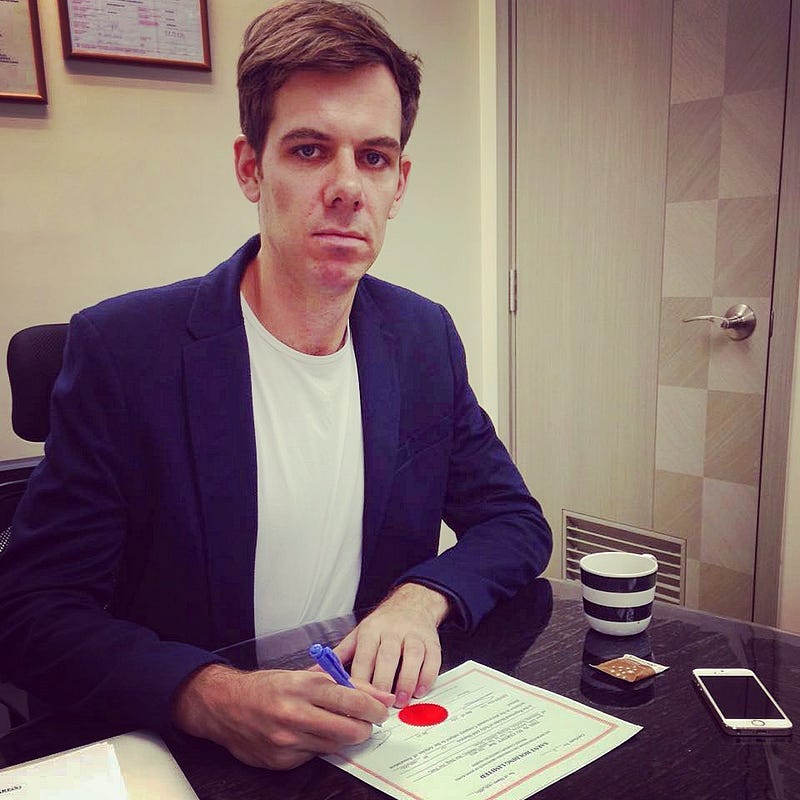
Me signing our company share certificates in Hong Kong on the third day of our campaign (yes, I look very serious).
*4. Lower your goal* Though I’m very happy with Indiegogo (here’s why we picked them), you do get forced into one devilish choice prior to launch regarding your funding:
- Fixed funding: reach your minimum funding goal, or else everyone gets their money back.
- Flexible funding: you receive the money from your supporters, even if you don’t make your target goal.
What’s the dilemma you might think? Option 1, fixed funding, only supports payments through Paypal, while option 2*, flexible funding, also supports normal credit card transactions through Stripe.
While this might seems like a subtle difference, the checkout and payment experience can influence conversion rates. We therefore opted for option 2, even though we had normally gone for option 1 (seems more fair to our supporters).
Now here’s the real issue: since we had to go for flexible funding anyway, we might as well have lowered our goal from $100k to $50k. Perception is everything and this would have meant we would now have been at double the “progress” towards our goal, which influences conversion and public perception (people are more likely to back a project which is closer to reaching its goal, according to our Indiegogo campaign strategist). Since we had decided on our $100k goal a long-time ago, this somehow didn’t cross my mind until after we had launched.
** Further, Indiegogo somewhat paradoxically takes a larger cut of your campaign’s proceeds if you choose flexible funding but fail to reach your goal.*
*5. Have a very clear time table and role assignment for launch day* Your launch moment should be like a well-coordinated wedding or movie shoot: every detail planned and ready. While we did make an attempt to do so using a special Google Calendar, in reality there were still some misunderstandings and gaps as to what exactly would happen when and by whom.
While I’m strongly against micro-managing and time-based planning of small tasks, the 24 hours around our launch could have benefited from a strict task-breakdown of exact time-slots and responsibilities in a spreadsheet. We had some problems redirecting domains, had misunderstandings about who would respond to social media and so on. Small stuff, but it makes a difference.
6. Product Hunt has fallen out of love with crowdfunding campaigns* Word of warning: if you’re planning a crowdfunding campaign and are not familiar with Product Hunt, you haven’t done your homework and should probably critically review your entire campaign strategy. :)*
We had an influential “Hunter” lined up to post our product as soon as the campaign went live. Unfortunately, two days before we were set to launch, he emailed us to voice concern that Product Hunt has recently been clamping down on crowdfunding campaigns. They now only allow those which have already reached well beyond their target or will sometimes make exceptions for products they like and that agree to provide a special offer to the PH community.
For us, this meant we couldn’t have our Hunter post the product on launch. The PH team turned out to be very friendly and responsive, though, so it is worth contacting them in advance and check whether they’ll feature your product. At the very least, this helps you adjust your traffic forecasts, and perhaps they’ll be open to doing a special with you.
7. Mainstream media may not convert as well as you expect
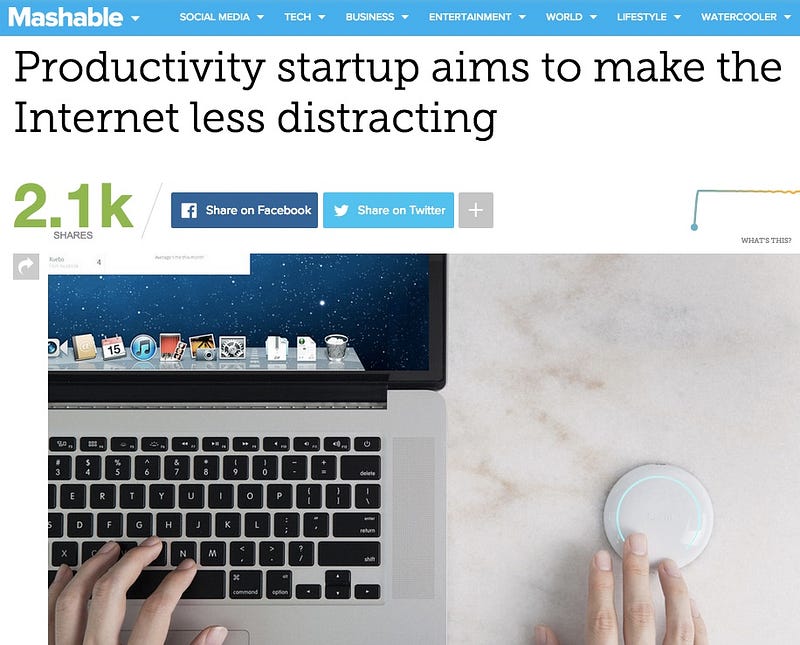
Saent featured on Mashable.
So far, our product has been featured on Mashable, Supercompressor, and Newsweek (which was even translated for the Japanese edition!). Not bad, I would say. Yet in terms of dollars raised, we have little to show for all that coverage.
It could of course be something’s wrong with our product proposition, but so far it seems exposure in established online media outlets doesn’t necessarily lead to conversion. Having said that, it is very useful in building “social proof” (trust and credibility) now and in the future (post-campaign), as you can add those media site logos to your page.
Bonus tip: LinkedIn Groups did nothing for us. We had the owner of several groups, totalling over 300,000 members (!), post something about our launch and got perhaps two or three purchases (I’m not even going to begin calculating what conversion rate that is!).
*8. Ask for endorsements from influencers* While the conversion from established media was disappointing so far, getting endorsements from key influencers in our product segment was much easier than I had anticipated.
I sent this “cold” (no introduction) mail to Nir Eyal, best-selling author of Hooked. After trading a few messages, he not only went ahead and purchased a product, he gave us this endorsement:
“Having written a book on what makes technology habit-forming, I believe technology is becoming harder to resist. Saent is a step forward — helping us regain control so we can be more productive. I’m a proud Saent supporter.”
Something similar happened with Mike Vardy, the guy behind the well-known productivity blog Productivityist. After receiving this mail from me, he purchased a product, invited me on his show and recommended all his listeners to order a Saent as well.
While it might seem scary to reach out to authorities in your field, it’s definitely worth it; they could prove much more willing to help you than you’d expect.
*9. Take breaks, no matter how hard it seems* Once the roller coaster takes off, it seems impossible to take breaks:
- You have still have more people to mail.
- Questions from potential supporters are coming in.
- You need to compose an email update for your Funders.
- There’s an interview request from Newsweek.
- And so on.
There’s so much to do, taking a break (whether a short one or a long one like, let’s say, sleeping) is probably the last thing you want to do. But getting refreshed and gaining a fresh perspective is easily one of the best things you can do.
After the initial 36 hours of madness, being locked inside that plane to Hong Kong (see “Do whatever you can in advance” above) without an internet connection was a Godsend. Not only was I forced to stop refreshing the Indiegogo page for a while (see below), but I also had some time to simply think and reflect on what had happened so far.
10. Stop checking that counter!
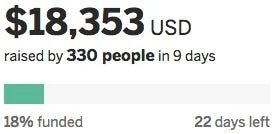
I know, this is almost impossible advice, but the counter on your crowdfunding page can drive you crazy. It’s extremely tempting to constantly refresh. Sometimes it’s great (every refresh adds dollars), but it can also be demotivating when you hit a dry spell and see nothing happening for hours in a row.
Similarly, you might want to consider not registering the campaign on your personal email address. I’m currently getting an email for every contribution to our campaign, which triggers a similar hit-refresh-game in my mailbox.
Bonus tip: once you get our product, you can simply mark your campaign page as “unproductive” and only be allowed to see it when you’re not in a focused work session. ;)
Ready to give Saent a try?
Download the free app now to start working smarter, being more focused, and developing better work habits.
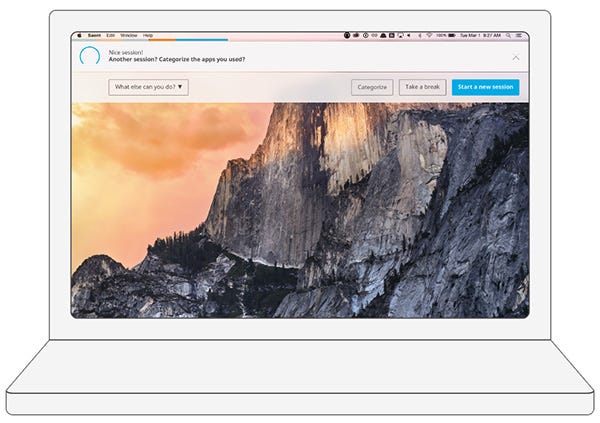
You can download the free version of the Saent app now by clicking the image above.
Or buy your Saent button (now shipping!) with a 12-month subscription to the Premium Saent app included!